
Thumbnail: What It Is, What It’s For, and How to Make Your Own
Understand what a thumbnail is, what it's for, the right size on YouTube, and the full step-by-step to create yours for free, even with AI.

What will we see in this post

Thumbnail is a small image used to visually represent a piece of content before the click. On YouTube, it works as the video’s cover and appears next to the title to help the viewer quickly understand the topic and decide whether to watch.
That’s why creating a good thumbnail is an important step in publishing videos. YouTube itself reports that 90% of top-performing videos use custom thumbnails, instead of relying only on the options the platform generates automatically.
Here we go from start to finish: what a thumbnail is, what it’s for, the right size on YouTube and, most importantly, how to make your own step by step, for free and even with AI.
With some care around design, readability, and consistency with the content, it’s possible to create eye-catching thumbnails even without professional editing experience.
What is a thumbnail?
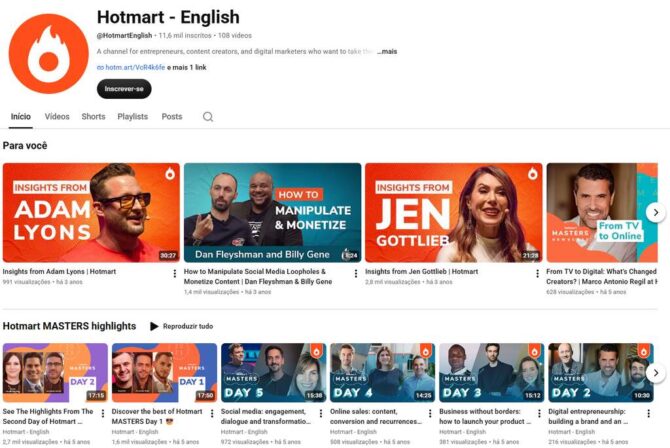
A thumbnail is the small image that represents a piece of content online and works as the cover of a video, a post, or a file. On YouTube, it’s the image that appears next to the title and gives, at a glance, a preview of what the video is about.
The name comes from thumb, as in the size of a thumbnail on your own thumb. The idea is exactly that: a small sample, roughly the size of a fingernail, that already carries the essence of the entire piece of content.
A thumbnail isn’t the video itself, nor is it a random frozen frame. When you don’t pick a cover, YouTube generates an automatic one from some random frame, and the result almost always falls flat. The custom version is the opposite: an image designed to grab attention and say, in one second, why it’s worth watching.
What is a thumbnail for?
A thumbnail exists to visually represent the content and spark the viewer’s interest in the video. On YouTube, it works together with the title and can influence the decision to click or keep scrolling.
One of the metrics tied to this performance is click-through rate, or CTR, which shows how often people watched a video after seeing its thumbnail.
That said, earning the click is only part of the outcome: the video also needs to deliver on what it promised and hold the interest of anyone who started watching.
Netflix figured this out a long time ago, and creates different cover versions for the same title, testing which image resonates best with each audience profile. You don’t need Netflix’s infrastructure to apply the same logic: a clear, appealing cover already puts your video ahead in the fight for attention.
How do you make a thumbnail? Step by step
To make a thumbnail, you need a good-quality image, a design editor, and the right size for the platform. The most common path is to pick a sharp photo or frame, open an editor, adjust the text and colors, and export the image in the right format.
This is the part that matters most, so let’s go step by step: first the size, then free tools, then AI-assisted creation, and finally how to upload the cover to YouTube.
Thumbnail size and specifications
For YouTube video thumbnails, the recommended aspect ratio is 16:9, with a minimum width of 640 pixels. According to the platform’s documentation, larger images can help maintain good display quality across different devices.
| Specification | Recommended value (YouTube, 2026) |
|---|---|
| Aspect ratio | 16:9 |
| Minimum width | 640 pixels |
| Recommended resolution | 3840 x 2160 pixels (1280 x 720 also works) |
| Accepted formats | JPG, PNG, GIF |
| File size | Up to 2 MB from mobile and up to 50 MB from a computer |
File size tends to confuse people who learned the old rule. From mobile, the limit is still 2 MB. From a computer, you can now upload files up to 50 MB, according to the YouTube Help Center. If you still see the 1280 x 720 recommendation floating around, it’s not wrong — it’s just the quality floor that works well in most cases. For new videos, it’s worth aiming for the higher resolution.
Free tools for creating a thumbnail
You can create a thumbnail for free using online editors that offer ready-made templates and resources.
Online editors like Canva, Adobe Express, and Fotor, along with dedicated photo editing apps, offer YouTube-sized templates, stock imagery, and drag-and-drop editing, all in the free tier.
The steps are similar across any of them:
- Open the editor and search for a “YouTube thumbnail” template, or create a blank file sized 1280 x 720;
- Choose a sharp background image, ideally with a face or object front and center;
- Add short text, three to six words, in a bold, easy-to-read font;
- Adjust color contrast so the image pops, even on a small phone screen;
- Export as PNG or JPG and save the file to reuse as a template for future videos.
The advantage of keeping a saved template is visual identity. When your covers follow the same style, your audience recognizes your channel before they even read the name.
How do you create a thumbnail with AI?
AI tools can help create visual elements, images, and variations for a thumbnail from text prompts. Depending on the tool and the features available on your account, you can also use AI to speed up steps like background removal, image generation, and layout creation.
AI can work as a starting point, but human review still matters. Check whether the generated images, text, and elements accurately represent the video’s content and whether they stay readable when shown at a small size.
This shift is already a reality among content creators. According to a study by FGV in partnership with Hotmart, carried out in Brazil, 83% of producers who use AI turn to the technology specifically to create or edit images. AI doesn’t replace the judgment of someone who knows their audience, but it shortens the grunt work: you describe the idea, it delivers a starting point, and you refine the rest.
How do you add the thumbnail to your YouTube video
Once you’ve created the cover, uploading the thumbnail to YouTube takes less than a minute. The process runs through YouTube Studio:
- Go to YouTube Studio and click Content in the side menu;
- Select the video you want to edit;
- In the thumbnail section, click “Upload thumbnail” and choose the file on your computer;
- Save your changes.
Worth remembering: uploading a custom thumbnail requires a verified account. The good news is you can swap the cover on an already-published video at any time, without losing views, which leaves room to test new images on older videos.
What channels are thumbnails used on?
Thumbnails can be used on both images and videos to grab users’ attention. Some of the main channels where they show up include:
- blogs;
- websites;
- social media;
- video platforms like YouTube or Vimeo;
- WhatsApp files.
Just keep in mind: pay attention to each channel’s posting rules so your thumbnails stay appropriate and get good results.
Elements of a thumbnail that converts
A good thumbnail needs to be easy to understand even at a small size, and it needs to accurately represent the content the viewer will find after clicking. There’s no single combination of colors, text, or expressions that works for every channel, but a few principles help:
- Sharp image: keep the main subject front and center and avoid too many elements competing for attention;
- Readable text: if you use text, stick to a few words at a size that’s still readable on smaller screens;
- Contrast: clearly separate text, people, objects, and background to make the image easier to read;
- Visual hierarchy: make it clear which element should catch the eye first;
- Consistency with the title: use the thumbnail to complement the title instead of simply repeating the same information;
- Visual identity: when it makes sense, keep recurring elements that help your audience recognize your content.
The most important thing is to avoid rigid formulas. A thumbnail that works for one channel might not deliver the same result on another. So it’s worth testing different approaches and tracking your own audience’s behavior.
Tips for making better thumbnails
Beyond nailing the elements, a few practices separate an amateur cover from a professional one.
- Avoid clickbait: a cover that promises something the video doesn’t deliver might earn the click, but it drives the audience away in the first few seconds, and that hurts your recommendations. Repeatedly using misleading thumbnails can reduce a channel’s reach, according to YouTube’s own guidelines.
- Test different versions: when the feature is available in your YouTube Studio, use the title and thumbnail testing tool to compare different options. Instead of choosing based on personal preference alone, let audience behavior tell you which approaches work best for your channel.
- Think mobile-first: most people watch on their phone, where the cover shows up tiny. Before publishing, shrink the image down and check whether the text is still readable and the subject still pops.
- Put in the effort during filming: it’s worth grabbing a few extra photos while you record the video, using the best video recording tools you have on hand, so you have good cover options when it’s time to put the thumbnail together.
So far we’ve talked about thumbnails on YouTube, where they matter most. But the concept goes well beyond video.
What mistakes should you avoid when creating a thumbnail?
Some mistakes can hurt how well a thumbnail communicates, or set an expectation that doesn’t match the video’s actual content. Before publishing, it’s worth reviewing these points in particular:
- Adding too much text: too many words make it hard to read, especially on mobile;
- Repeating the title exactly: use the image to add to the information instead of taking up space with the same message;
- Adding too many elements: too much text, too many images, icons, and colors can make it hard to identify the main subject;
- Using low-quality images: blurry or pixelated photos can hurt how the video comes across;
- Ignoring the mobile view: check whether the main elements are still visible when the image shows up small;
- Promising something the video doesn’t deliver: an eye-catching thumbnail still needs to stay consistent with the actual content.
After publishing, track how the video performs and test new versions when it makes sense. Making good thumbnails is also a learning process about what sparks your own audience’s interest.
From thumbnail to digital product: turning an audience into income
Anyone learning to make a good thumbnail is taking a step that goes beyond the click: they’re building an audience. And an audience is the raw material for anyone who makes a living from content.
Brazil alone has more than 14 million content creators, according to the Wake Creators 2025 census — a pattern repeating, at different scale, in creator markets everywhere. A lot of them started exactly like this: publishing video on YouTube, earning their first subscribers, and, at some point, realizing they could become a content creator professionally and turn that knowledge into a digital product, like a course, an ebook, or a paid community.
That’s where Hotmart comes in, an all-in-one platform for creators to sell digital products. After attracting people with good videos and good covers, you can bring your knowledge together into a product and sell it to the same audience that already trusts you. Creating an account is free, with no monthly fee, and you can start from scratch.
If the idea makes sense for you, it’s worth understanding how to create a digital product, learning the paths to create and sell online courses, and seeing how investing in paid advertising can speed up your reach. The click on your thumbnail could be the start of a business.
Why is it worth putting effort into your thumbnail?
Understanding what a thumbnail is matters for anyone publishing videos who wants to present their content better, even before the first click. On YouTube, the thumbnail works together with the title to quickly show the viewer what the video is about and spark their interest.
Throughout this guide, we covered how to create a thumbnail, what dimensions to use, what elements to consider, how to make the most of free tools and AI features, and what mistakes to avoid during creation.
There’s no visual formula that works for every channel. That’s why, alongside good practices around readability, contrast, and consistency with your content, you should track your results and test different approaches. Over time, your own channel data can help you understand which thumbnails work best for your audience.
Frequently asked questions
Here are the most common questions from people looking for more information about what a thumbnail is.
What's the difference between a thumbnail and a cover?
A thumbnail is a small image that represents a piece of content before it's opened. On YouTube, it works as the video's cover. That's why the terms "thumbnail," "miniature," and "video cover" are often used to talk about the same image.
What should you put on a thumbnail?
A thumbnail should visually highlight the subject or main idea of the video. You can use an image, a person, an object, an illustration, and short text, as long as the elements are readable and consistent with the content. Avoid overloading it with information and check how the image looks on smaller screens.
What's the ideal thumbnail size on YouTube?
The recommended aspect ratio is 16:9, with a minimum width of 640 pixels. YouTube recommends a resolution up to 3840 x 2160 pixels and accepts files up to 2 MB from mobile and 50 MB from a computer, in JPG, PNG, and GIF formats.
How do you make a thumbnail for free?
Use a free online editor like Canva, Adobe Express, or Fotor. They have ready-made templates in YouTube's size, so all you have to do is swap the image, adjust the text, and export as PNG or JPG. None of them charge to create and download the cover.
Can you create a thumbnail with AI?
Yes, YouTube Studio itself generates AI thumbnails based on your video's content, and tools like Canva create covers from a text description. AI gives you a starting point that you then fine-tune.
Does a thumbnail increase views?
It helps a lot. According to YouTube, 90% of top-performing videos use a custom thumbnail. A good cover increases click-through rate, and more clicks signal to the algorithm that the video is worth recommending.
Can I change the thumbnail on an already-published video?
Yes, at any time, without losing views. Just go to YouTube Studio, open the video, and upload a new thumbnail. It's a simple way to test new covers on older videos.