
What Is a VSL: What It Is, How It Works, and Tips for Your Video Sales Letter
Understand what a VSL is, how it works, the types and formats, and see the full step-by-step for scripting a sales video that converts.

What will we see in this post

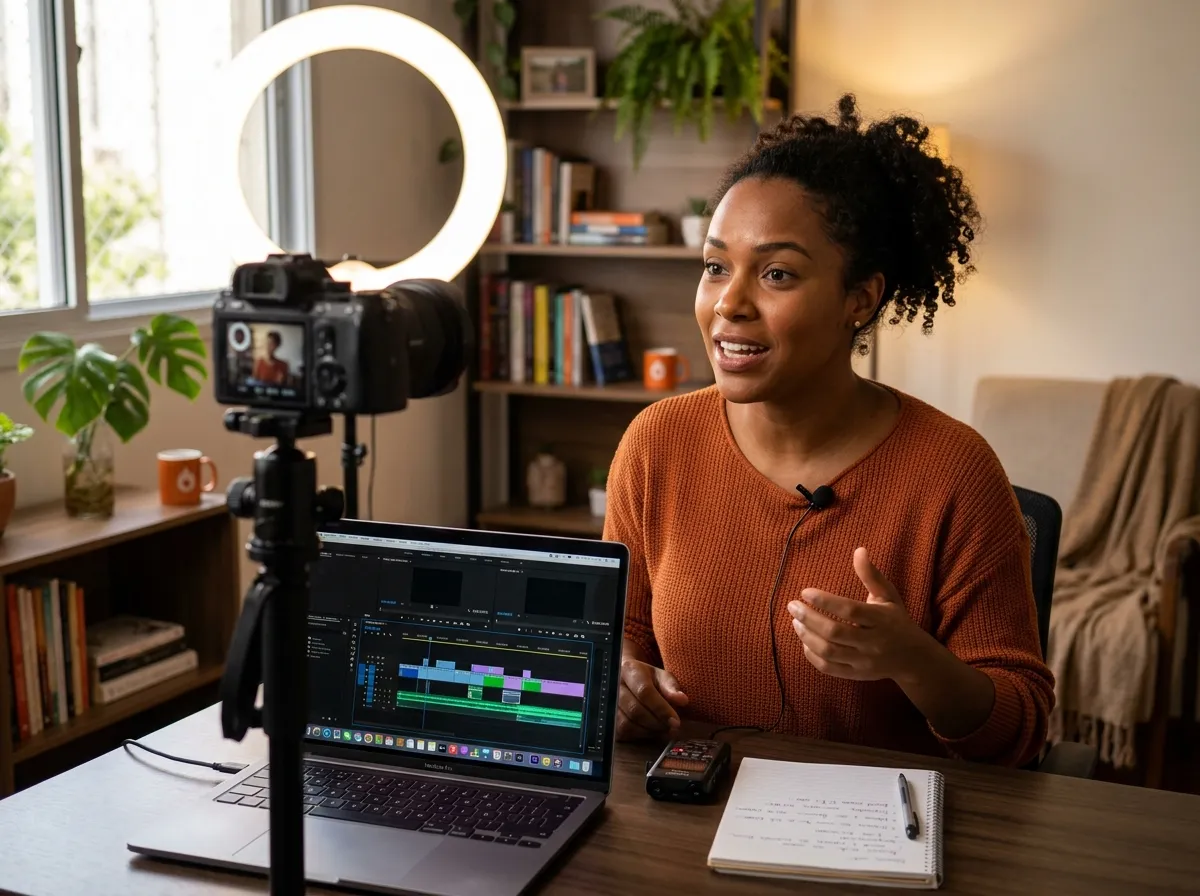
VSL (Video Sales Letter) is a sales letter in video format, built to drive whoever’s watching toward a specific action, like buying a product or signing up to a list.
It uses the same persuasion principles as a written letter, only with voice, imagery and pacing to build a connection faster. In this guide you’ll see what a VSL is, the types, the formats, the ideal length, and the step-by-step for creating your own.
Quick summary:
VSL stands for Video Sales Letter, a sales pitch delivered on video.
It’s used to present an offer and guide the viewer toward a purchase or sign-up.
It works on sales pages, ads, email and social media.
85% of people say they’ve bought something after watching a video (Wyzowl, 2026).
The most effective length tends to fall between 30 seconds and 2 minutes.
Once you understand how a video sales letter is put together, it becomes easier to use this format to sell a course, a mentorship or any digital product. The good news is you can start simple, with what you already have on hand, and refine it over time.
What is a VSL (Video Sales Letter)?
A VSL is a sales video with a structured script designed to convince the viewer to make a decision. The name comes from Video Sales Letter, essentially a written sales letter translated to video. The idea is simple: take the logic of a written sales letter — problem, solution, offer — and deliver it on screen.
It’s worth separating what a VSL isn’t. It’s not an institutional video that just introduces a brand, nor a generic ad with no clear offer. A VSL has a single goal in every viewing: moving the person to a next step, whether that’s buying, filling out a form, or clicking a link.
This format grew alongside video consumption overall. In Brazil, YouTube alone reaches around 150 million users, according to the Digital 2026 report by DataReportal. Wherever the audience is, a video offer tends to perform better.
How does a VSL work?
A VSL works by guiding a potential customer through a sequence of arguments toward an offer and a call to action. The goal is for every part of the video to answer a question or build enough interest to keep the person watching.
There’s no single required structure for every video sales letter. The script depends on the product, the audience, the channel, and the strategy at play. Even so, a VSL usually works with elements like:
- Hook: presents a question, problem, situation or benefit strong enough to capture attention right away, often leaning on trust signals, curiosity or urgency;
- Problem: shows that the brand understands a need or difficulty the audience is facing;
- Development: digs deeper into the problem and gives information that helps the viewer understand the situation;
- Solution: introduces a way to solve the problem that was presented;
- Offer: shows how the product or service fits that solution and explains its main benefits;
- Proof: uses demonstrations, data, testimonials or other elements that back up the claims made in the video;
- Objections: answers doubts that could hold back the decision, like price, how it works, ease of use, or fit;
- Call to action: clearly explains what the next step should be, like buying, signing up, or requesting more information.
The order and how much space each element gets can vary. A simple offer might need just a few minutes of explanation, while a more complex product might call for a longer argument.
What matters most is that the VSL has one central goal and that every part of the script pushes the viewer toward that action.
How long should a VSL be?
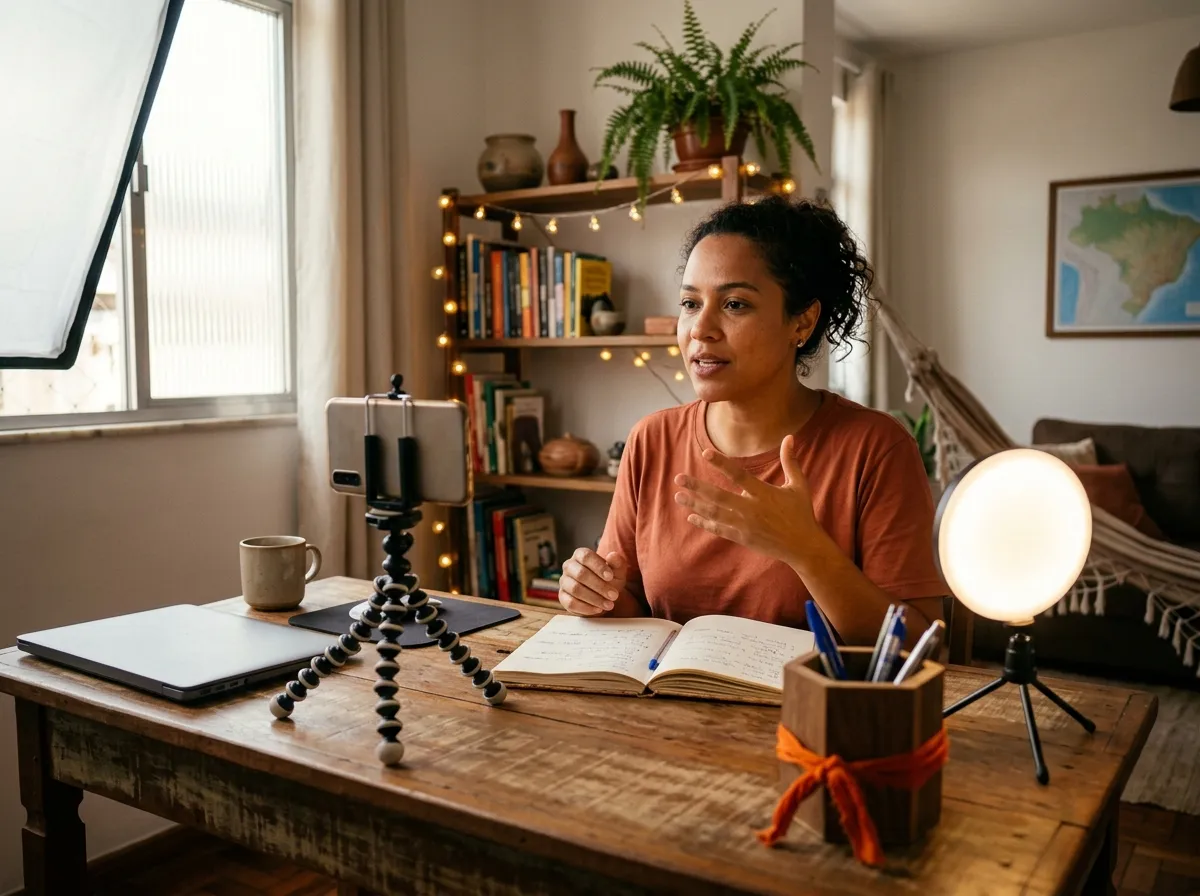
There’s no ideal VSL length that works for every product and audience. The video needs to be long enough to lay out the arguments the decision requires, without padding it out just to stretch the runtime.
A VSL can run just a few minutes or be considerably longer. The choice mostly depends on factors like:
- Product complexity: offers that need more explaining may call for longer videos;
- Price: products tied to a bigger financial decision may need more arguments, proof, and objection-handling;
- Audience familiarity: an audience that already knows the brand or product may need less context;
- Channel: a VSL used on a sales page may play out differently than one used in a campaign;
- Number of objections: the more doubts that need answering before the purchase, the more development it may need;
- Goal: selling directly, generating a lead, and moving someone into a sales conversation are three different jobs.
So avoid locking in a length before you develop the argument. First, write everything needed to explain the problem, present the solution, back up the offer, and answer the main objections. Then revise the script and cut repetition and anything that doesn’t move the decision forward.
What are the types of VSL?
VSL types differ by the persuasion goal of each video. Knowing each one helps you pick the right approach for your offer.
- Demonstrative: shows the product working in practice, which builds trust for anyone still on the fence.
- Story-driven: uses narrative and storytelling to connect the brand’s story to the audience’s pain points.
- Educational: teaches something useful and, while explaining the problem, presents the product as the solution.
- Urgency-driven: shorter and more direct, built to trigger a fast decision around a special condition.
- Testimonial: gathers testimonials from customers who already got results, reinforcing social proof.
These types aren’t mutually exclusive. A single VSL can mix narrative and demonstration, for example, and still keep one clear goal.
What are the VSL formats?
While the types are about the goal, the formats are about the video’s production style. This is the part that tends to trip up beginners, so here’s the direct answer: you don’t need to be on camera to make a VSL.
- Slides with narration: a presentation with text and images, guided by a voiceover. Good for anyone who’d rather not appear.
- Talking head: someone speaks directly to the audience, which builds closeness and humanizes the message.
- Animation: characters and graphics explain the offer in a light, visual way.
- Screen recording: shows the screen to demonstrate software, an app, or a members area from the inside.
- Hybrid: combines two or more formats, like slides mixed with clips of someone talking.

What are the benefits of a VSL?
The main benefit of a VSL is turning attention into a buying decision more easily than text alone can. 2026 data helps explain why.
85% of people say they’ve been convinced to buy a product or service after watching a video, according to the State of Video Marketing 2026 report by Wyzowl.
63% would rather learn about a product through a short video, versus 12% who choose text, in the same research.
82% of marketers report a good return on investment with video.
91% of businesses use video as a marketing tool in 2026, showing the format has stopped being optional.
For anyone looking to sell digital products, those numbers translate into a practical advantage: a VSL brings sound, image and narrative together to explain the product and handle objections in one place.
How do you make a VSL? Step by step
To make a VSL, you define the goal, write the script, record, edit, and publish it at the right conversion point. Here’s each step in order.
- Define the goal and the audience: before recording, be clear on what the VSL needs to accomplish and who it’s talking to. Knowing your audience well shapes the tone, the examples, and the offer.
- Write the script: put the order of ideas on paper, from the problem to the call to action. It’s easier to adjust a document than to re-record an entire video.
- Record the audio and image carefully: clear sound and a stable image already solve most of the result, even with simple equipment — recording apps on your phone are often enough to start.
- Edit with rhythm: keep slide transitions or cuts in sync with the narration, and cut anything that doesn’t help sell.
- Publish and track: place the VSL on the sales page, the ad, or the email, and watch the results to adjust the next version.
Script and VSL structure
The VSL script organizes the entire argument before recording. This is the stage where you define what needs to be said, in what order, and which proof and objections need to show up to help the potential customer make a decision.
Before writing, answer a few questions:
- Who’s the person who should watch this VSL?
- What problem do they want to solve?
- What have they probably already tried?
- How can your product help them?
- What’s the main benefit of the offer?
- What proof backs up the claims you’re making?
- What doubts or objections could block the purchase?
- What do you want the person to do after the video?
With those answers, it gets easier to organize the script. A basic structure can follow this sequence:
1. Hook
Start by presenting a problem, question, situation or benefit relevant to the audience. The goal is to make it quickly obvious why it’s worth continuing to watch.
2. Problem
Build out the situation that brought the potential customer to your offer in the first place. Avoid exaggerating the pain just to trigger fear. What matters most is showing that you understand the audience’s context.
3. Solution
Present the logic behind the solution. Before talking only about the product’s features, explain how it actually helps solve the problem you laid out.
4. Offer
Show the product or service and explain what’s included. In an online course, for example, you might present the content, modules, bonus material, support and other relevant resources.
5. Proof
Whenever possible, back up your claims. Product demonstrations, verifiable results, reviews and testimonials can help the audience evaluate the offer with more confidence.
6. Objections
Think through the main reasons someone might back out of the purchase. Depending on the offer, doubts can involve price, time required, ease of use, how it works, or fit.
7. Call to action
Close by clearly explaining the next step. If the goal is a sale, show how to buy. If the VSL is meant to generate leads, explain how to sign up.
Once you finish the script, read it all out loud. That helps you catch stiff phrasing, repetition, and sections that run too long before you start recording.
As Gi Isquierdo, a psychologist, neuroscientist and presentation and public-speaking specialist, sums it up: “The introduction is the most important part; that’s where you win the audience. If you don’t win the person over right there, they won’t watch your video. You have to be strategic.”
Recording, angles and editing
Remember you’re making a video meant to sell, so angles and editing shape the impact on the person watching. Deciding on this presentation already at the script stage saves time during recording.
Record clear audio at a pace that lets people follow the message. Also make sure the edit keeps slide or scene changes in sync with the voiceover.
Where should you use a VSL?
A VSL can be used at different stages of a sales strategy, mainly whenever you need to explain an offer and move a potential customer toward an action. The choice of channel depends on the video’s goal and the stage the audience is at.
Among the possibilities:
- Sales page: the VSL can lay out the offer’s main arguments before the buy button — see how to structure a good sales page;
- Landing page: it can explain a proposal before asking for a sign-up or other conversion — understand what a landing page is;
- Sales funnel: the video sales letter can show up at a specific stage to prepare a lead for the offer;
- Email: the video can complement a email marketing campaign and direct the contact to a conversion page;
- Media campaigns: adapted versions of the message can be used to present the offer to different audiences through paid advertising;
- Sales processes: depending on the business, the video can prepare a potential customer before a conversation with the sales team.
The same VSL doesn’t need to be used the same way across every channel. In many cases, it makes more sense to adapt the script, the length, and the call to action to the context where the audience will find the video.
What mistakes should you avoid when creating a VSL?
Some mistakes can make a VSL confusing, too long, or unconvincing. That’s why, after producing the video, it’s worth reviewing it with the eyes of someone who doesn’t know your offer yet.
Among the main things to watch for:
- Taking too long to get to the point: the opening needs to quickly show why the content matters;
- Talking only about the product: before listing features, explain what problem the offer solves and why that matters to the audience;
- Making promises without proof: strong claims need to be backed by information, demonstrations, or adequate evidence;
- Ignoring objections: important unanswered doubts can stop the viewer from moving forward;
- Using fake urgency: deadlines and special conditions need to match the real offer;
- Prioritizing editing and forgetting the script: visual effects don’t make up for a confusing argument;
- Ending without a call to action: after watching, the viewer needs to clearly understand what to do next.
Is it worth using a VSL in your strategy?
A VSL can be a very useful tool for anyone who needs to present an offer in a structured way, explain a product better, and move a potential customer toward a specific action. Throughout this guide, we covered what a VSL is, how it works, the main formats, how to structure a script, how long it can run, where to use it, and what metrics to track after publishing.
More important than producing a polished video is building a clear message. A good VSL needs to show it understands the audience’s problem, present the solution objectively, back the offer with adequate proof, answer the main objections, and clearly point to the next step.
If you’re just starting out, you don’t need to nail a perfect version on the first try. Start with a simple structure, publish it, track retention, clicks and conversions, and use that data to improve the script, the edit, and the offer in your next versions.
Frequently asked questions about VSL
Here are the most common questions from people looking for more information about VSL.
What does VSL mean?
VSL stands for Video Sales Letter, a sales pitch delivered on video. It's a structured video built to present sales arguments and move a potential customer toward an action, like buying a product, signing up, or requesting more information.
What's the difference between a VSL and a sales video?
A VSL is a specific type of sales video structured around the logic of a sales letter, usually developing problem, solution, offer, proof, objections and a call to action. "Sales video" is a broader term and can include other commercial formats that don't follow that structure.
How long should a VSL be?
There's no ideal VSL length for every offer. The time needed depends on product complexity, price, audience, channel, and how much information and how many objections need to be covered. The goal is avoiding both cuts that hurt the argument and an artificially long runtime.
What can't a VSL skip?
A VSL needs a clear offer and a clear call to action. Beyond that, the script usually works with elements like a hook, a problem, a solution, benefits, proof, and answers to the potential customer's main objections.
Do you need to appear on camera for a VSL?
No. It's entirely possible to create a VSL without appearing on camera. The video can use narrated slides, animation, screen recordings, or a combination of these. The format should be chosen based on the offer, the audience, and the resources available.
Where should you place a VSL?
A VSL can be placed on a sales page, a landing page, or another stage of a sales funnel. Depending on the strategy, the video can also support campaigns, emails, and sales processes. What matters is that wherever it's placed lets the viewer easily take the proposed action.
How do you make a VSL that converts?
To boost your chances of converting, start by knowing your audience and building a clear offer before writing the VSL script. Present a relevant problem, explain the solution, show adequate proof, answer the main objections, and close with a clear call to action. After publishing, track retention, clicks and conversions to spot what can be improved.