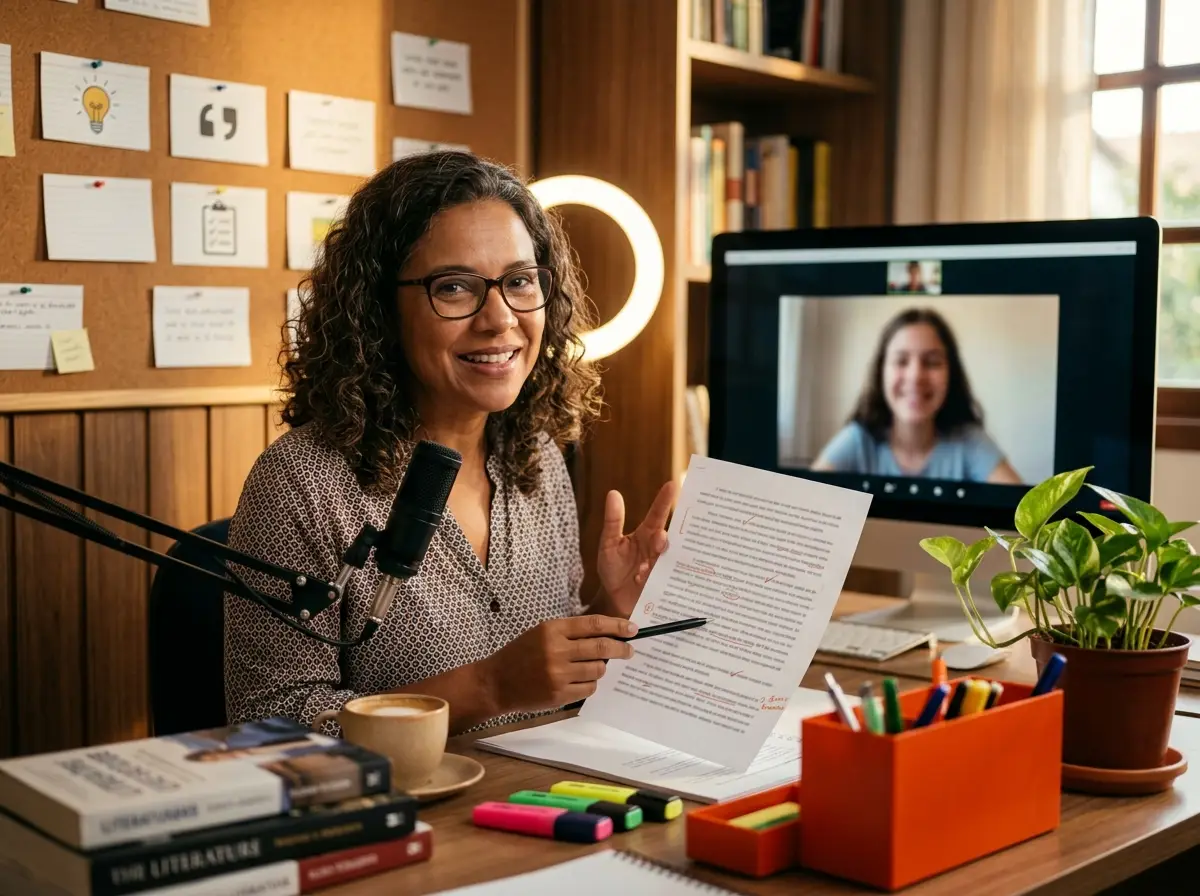

How to start a business from scratch: a step-by-step guide to launching a digital business
Learn how to start a business from scratch with a practical step-by-step guide: what to sell, how to validate your idea, formalize, organize your finances, and win customers.

What will we see in this post

Starting a business from scratch doesn’t mean having a brilliant idea, a lot of money to invest, or a ready-made structure. It means understanding what problem you can solve, for whom, and the best way to turn that solution into a business.
When you’re just getting started, the path can feel full of decisions: what should I sell? How do I know if anyone will buy? Do I need to open a company? How much money do I need to invest?
The good news is that you don’t have to answer everything at once. In this article, we’ll show you how to start a business from scratch with a practical step-by-step guide, including ways to begin with little money and take advantage of the opportunities in the digital market.
What do you need to start a business from scratch?
To start a business from scratch, you need to identify a real problem you can solve, understand who has that problem, and validate whether there’s demand for the solution before investing a lot of time or money in it.
This can start with something you already know how to do. A professional skill, experience gained throughout your career, or even knowledge you developed out of personal interest can become a product or service.
Before thinking about a logo, website, company name, or big investments, it’s worth answering more basic questions: who do I want to help? What problem does that person have? What can I offer to solve it? And is anyone willing to pay for it?
These answers help turn an idea into a real business opportunity.
Do I need a brilliant idea to start a business from scratch?
No. You don’t need to invent something that has never existed to start a business.
Many businesses find opportunities precisely in well-known problems. The differentiator may lie in offering a solution that is simpler, more accessible, more specialized, or better suited to a specific audience.
That’s why waiting for the “perfect idea” can hold you back more than it helps. Instead of asking “what has nobody ever done?”, try looking at what already exists and where there’s still room to do it better.
A good business idea doesn’t have to be unprecedented. It has to make sense to someone.
Step by step: how to start a business from scratch
If you’re looking for how to start a business from scratch, a few steps help organize the process and reduce risk before you make bigger investments.
In general, the path involves:
- Defining what to sell and to whom
- Validating the idea before investing
- Choosing the business model
- Making your business official
- Organizing your finances from day one
- Launching an MVP
- Finding your first customers
The order can be adapted to your business, but the logic is to start small, test, and learn before scaling.
1. Define what to sell and to whom
The first step is to understand what problem you want to solve and who faces that problem.
The solution doesn’t have to be a physical product. If you want to start a business online, there are several possibilities: an online course, an ebook, mentoring, a service, a physical product, or even working as an affiliate.
Imagine, for example, that you have experience with financial organization for self-employed professionals. Instead of simply creating a “personal finance course”, you could develop specific material to help freelancers organize their income, expenses, and monthly planning.
The clearer your niche and audience and the problem are, the easier it will be to build a relevant offer.
2. Validate the idea before investing
Before putting money and months of work into an idea, try to find out whether there’s real demand for it. This is one of the most important steps if you want to understand how to validate a business idea.
You can start by talking directly to potential customers. First, ask about the problem they face, without trying to sell your solution right away. Their answers may reveal needs you hadn’t considered yet.
It’s also worth researching competitors and looking at what they offer, which audiences they serve, and where there seem to be gaps. Another option is to create a waitlist or run a pre-sale before finishing the product.
Finally, you can test a simpler version of your offer with a small group. The goal isn’t to prove the idea will be a guaranteed success, but to spend as little as possible to get real signs of interest.
3. Choose the business model
With the problem and audience clearer, it’s time to decide how the business will generate revenue.
In the digital space, some common options are:
- Digital products: online courses, ebooks, mentoring, and other content;
- Services: consulting, design, social media management, copywriting, programming, and other activities;
- Affiliate marketing: promoting other people’s products in exchange for a commission on sales;
- Physical products: creating, reselling, or selling products online.
The choice depends on your knowledge, the resources available, and the type of problem you want to solve.
4. Make your business official
Most countries offer simplified registration options for small business owners and self-employed professionals, such as a sole proprietorship. They can be a good way to formalize your activity when you’re starting from scratch, as long as your activity is eligible and you meet the other requirements.
Formalizing your business can make invoicing easier and bring more security to your relationships with customers and suppliers. It also helps separate your professional activity from your personal life and organize the business early on.
Before registering, check the rules and eligible activities in your country to make sure that option really applies to your case.
5. Organize your finances from day one
Even if the business is still small, treat its money as business money.
Whenever possible, separate your personal and business accounts and record everything that comes in and goes out. You don’t need to start with a complex system: a spreadsheet can already help you track revenue, costs, investments, and results.
This organization also helps you answer a fundamental question: is the business actually making a profit?
6. Launch an MVP (minimum viable product)
You don’t need to wait for the product to be perfect to put it to the test.
An MVP, or minimum viable product, is a simpler version of the solution that lets you test your proposal with real customers. It could be a first cohort of a course, an early version of an ebook, or a service offer with a well-defined scope.
Contact with your first customers helps you discover what works, what needs improvement, and which needs weren’t noticed at first.
7. Find your first customers
With your offer ready and validated, it’s time to find the first people willing to buy.
And you don’t need to start by spending large amounts on ads. Your personal network can be a first path, as can referrals, free content, and social media.
Sharing knowledge about the problem you solve helps attract people interested in the topic and can create relationship opportunities even before the sale.
In the beginning, the goal isn’t necessarily to reach thousands of people. It’s to find the right people.
How to start a business with little money
It is possible to start a business from scratch with little money, especially when the model you choose doesn’t require inventory, physical space, or a large team to get going.
That’s why the digital space can be an interesting alternative. A professional can turn their knowledge into digital products like a course, ebook, or mentoring program and start testing the offer without building a physical structure.
The same goes for services. Someone who already has a skill can start by offering their work to a few clients, understand the demand, and reinvest part of the first results into improving and growing the business.
The logic is simple: starting small doesn’t mean thinking small. It means testing before committing resources you might need later on.
What is the best business to start from scratch?
There’s no single “best business” to start from scratch. The choice depends mainly on your knowledge, the time available, the resources you have, and the problem you want to solve.
If you’re looking for how to start a business online from scratch, online courses, ebooks, mentoring, and services may have a lower barrier to entry than physical businesses that depend on inventory, space, and operational structure.
That doesn’t mean one model is automatically better than another. The point is to find a viable combination of what you know how to do, what the market needs, and what you can put into practice right now.
Formal or informal: how to make your business official
Testing an idea and formalizing a business are different moments. At first, some people choose to validate demand before taking on a formal business structure. But as sales start to happen, it’s important to evaluate the right type of registration for your activity.
Simplified options for small businesses can be a good fit for certain activities and business owner profiles, allowing you to operate officially and issue invoices, along with other obligations and benefits that come with each option.
Since the rules vary from country to country and not every activity is eligible for these options, check the current requirements before making a decision.
Operating informally, when used to test an idea, shouldn’t become a permanent strategy. As the business gains traction, getting properly registered becomes essential and part of how the company is organized.
What are the most common mistakes when starting from scratch?
Starting a business involves learning, and some mistakes come up often precisely when people try to skip steps.
The main ones are:
- Not validating the idea before investing time and money: building first and finding out later that there was no demand can mean a lot of rework.
- Mixing personal and business finances: without that separation, it’s harder to know how much the business really moves and earns.
- Trying to make everything perfect before launching: waiting for the ideal version can keep you from discovering what your first customers actually need.
- Not defining a specific audience: trying to sell to everyone usually makes communication and building the offer harder.
- Giving up after weak early results: the first tests are also there to help you learn and adjust your strategy.
Making mistakes is part of being an entrepreneur. The key is to create a process where mistakes cost less and teach you enough to guide your next step.
Ready to start your business from scratch?
Starting a business from scratch begins long before opening a company or making a big investment. It starts with identifying a problem, understanding who needs a solution, and validating whether there’s demand.
From there, you can choose a business model, organize your finances, evaluate how to formalize, and put a first version of your offer on the market. For those with little capital, digital businesses can lower some barriers to entry and let your investment grow along with the operation.
If you already have knowledge that could become a course, ebook, or mentoring program, you can take the first step by creating a free Hotmart account and start structuring your idea.
FAQ about how to start a business from scratch
Do I need money to start a business?
Not necessarily. Some business models, especially online, have lower startup costs. Knowledge-based products such as courses, ebooks, and mentoring can be created without inventory or a physical structure, so you can start in a leaner way.
Do I need to open a company to start selling?
Whether you need to formalize depends on your activity and the stage of your business. To test an idea, some people start informally, but once sales begin to happen, it’s important to evaluate the right type of registration. For certain activities, simplified options for small businesses, such as a sole proprietorship, can be a good alternative.
What is the first step to start a business from scratch?
The first step is to identify a real problem you can solve and validate whether there’s demand for that solution before investing a lot of time or money. Once you’ve validated it, it’s easier to define your product, audience, and business model.