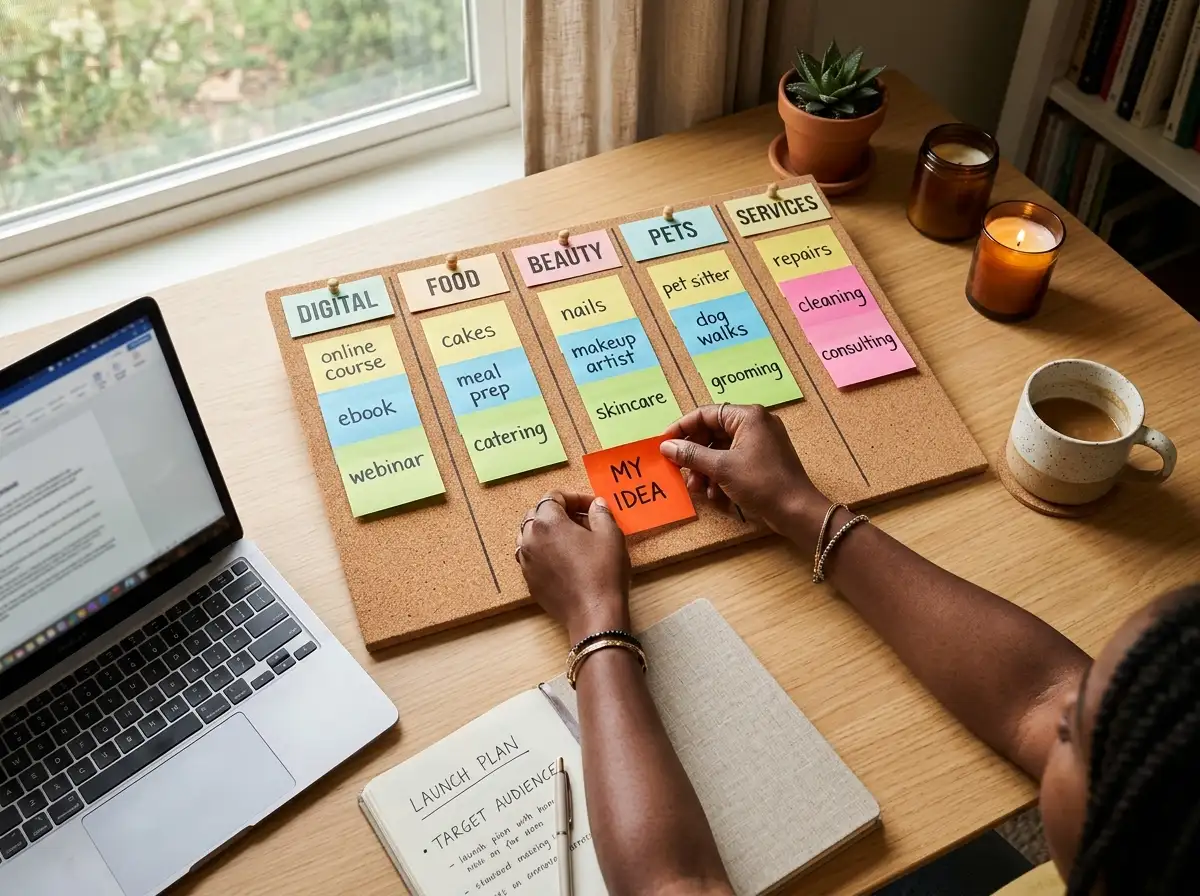
Business ideas: 60 options to start in 2026, with costs and examples
Explore 60 business ideas organized by area, with startup costs, real examples and market data, plus the best options for little money, home, online or small towns.

What will we see in this post

Nearly 1 in 5 American adults (18.5%) were starting or running a new business in 2025, close to the highest rate ever recorded by the Global Entrepreneurship Monitor. The hard part is deciding where to start.
That’s why we gathered 60 business ideas organized by area, with the startup cost of each one, where to sell, market data and real examples. At the end, you’ll also find the ideas grouped by profile: with little money, from home, online and for small towns.

What are the best business ideas to start?
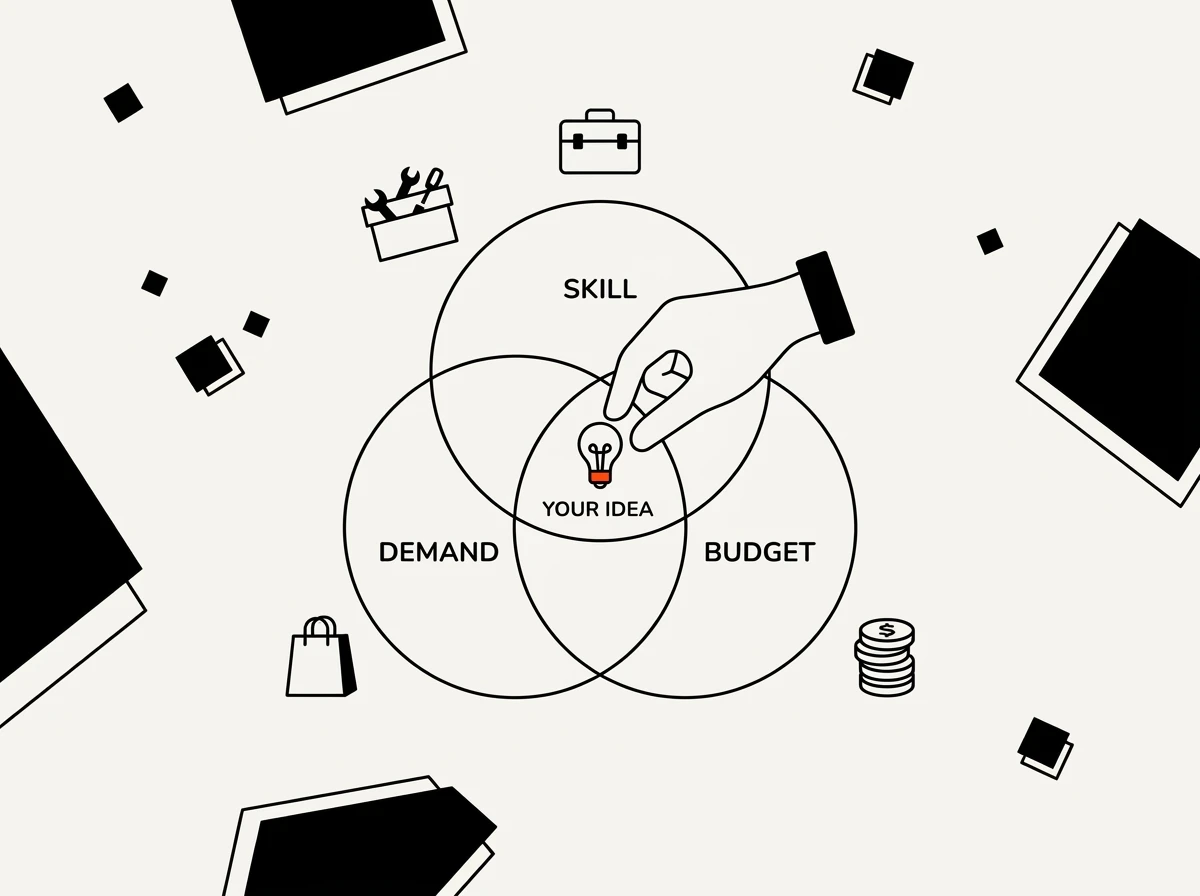
The best business ideas to start are the ones that combine a skill you already have, a demand that already exists and the money you have available today. In practice, the lowest-risk options for beginners are digital products (courses, ebooks, mentoring), services based on your knowledge (lessons, beauty, repairs, consulting), made-to-order food and pet services.
There’s no single “best” idea for everyone. A business that does well in a big city may not have an audience in a small town, and a brick-and-mortar store requires capital not everyone has. The table below summarizes the 60 ideas on the list so you can compare them quickly.
To read the table, use this startup cost scale: low means up to $1,000, medium means $1,000 to $10,000 and high means more than $10,000.
| # | Business idea | Area | Startup cost | Can you start at home? | Can you sell online? |
|---|---|---|---|---|---|
| 1 | Content creation | Digital | Low | Yes | Yes |
| 2 | Ebooks | Digital | Low | Yes | Yes |
| 3 | Online courses | Digital | Low | Yes | Yes |
| 4 | Online mentoring and coaching | Digital | Low | Yes | Yes |
| 5 | Paid community and membership | Digital | Low | Yes | Yes |
| 6 | Online events and workshops | Digital | Low to medium | Yes | Yes |
| 7 | AI digital products | Digital | Low | Yes | Yes |
| 8 | Affiliate marketing | Digital | Low | Yes | Yes |
| 9 | Online store | Digital | Medium | Yes | Yes |
| 10 | Apps, AI agents and tools | Digital | Low to medium | Yes | Yes |
| 11 | Website design | Digital | Low | Yes | Yes |
| 12 | Freelance writing, design and video | Digital | Low | Yes | Yes |
| 13 | Virtual assistant | Digital | Low | Yes | Yes |
| 14 | Niche restaurant | Food | High | No | Partial (delivery) |
| 15 | Homemade frozen meals | Food | Low to medium | Yes | Partial |
| 16 | Healthy meal prep | Food | Low to medium | Yes | Partial |
| 17 | Food truck | Food | High | No | No |
| 18 | Kids’ meals and snacks | Food | Low to medium | Yes | Partial |
| 19 | Custom cakes and baked goods | Food | Low | Yes | Partial |
| 20 | International cuisine | Food | Medium to high | No | Partial |
| 21 | Cooking classes | Food | Low | Yes | Yes |
| 22 | Upcycled and recycled products | Crafts | Low | Yes | Yes |
| 23 | Personalized gifts | Crafts | Low | Yes | Yes |
| 24 | Creative packaging | Crafts | Low | Yes | Yes |
| 25 | Handmade jewelry and accessories | Crafts | Low | Yes | Yes |
| 26 | Handmade candles and soaps | Crafts | Low | Yes | Yes |
| 27 | Niche clothing brand | Fashion | Medium | Yes | Yes |
| 28 | Thrift and resale store | Fashion | Low | Yes | Yes |
| 29 | Formal wear rental | Fashion | Medium | Partial | Partial |
| 30 | Personal styling | Fashion | Low | Yes | Yes |
| 31 | Mobile makeup artist | Beauty | Low | No | No |
| 32 | Nail technician | Beauty | Low | Yes | No |
| 33 | Massage therapy | Beauty | Low | Yes | No |
| 34 | Brow and waxing services | Beauty | Low | Yes | No |
| 35 | Beauty salon | Beauty | High | No | No |
| 36 | Beauty and fragrance resale | Beauty | Low to medium | Yes | Yes |
| 37 | Online pet store | Pets | Medium | Yes | Yes |
| 38 | Pet sitting and dog walking | Pets | Low | No | No |
| 39 | Language school | Education | Medium to high | Partial | Partial |
| 40 | Tutoring | Education | Low | Yes | Yes |
| 41 | Online private lessons | Education | Low | Yes | Yes |
| 42 | Test writing and grading | Education | Low | Yes | Yes |
| 43 | Sporting goods store | Sports | High | No | Yes |
| 44 | Dance classes | Sports | Low | Partial | Partial |
| 45 | Personal trainer | Sports | Low | No | Partial |
| 46 | Gym or fitness studio | Sports | High | No | No |
| 47 | Event planning | Events | Low to medium | Yes | No |
| 48 | Event decorating | Events | Medium | Yes | No |
| 49 | Party rental | Events | Medium | Yes | No |
| 50 | Kids’ party entertainment | Events | Low | Yes | No |
| 51 | Financial consulting | Services | Low | Yes | Yes |
| 52 | Digital marketing for small businesses | Services | Low | Yes | Yes |
| 53 | Business plan consulting | Services | Low | Yes | Yes |
| 54 | Senior care | Services | Low | No | No |
| 55 | Professional organizer | Services | Low | No | Partial |
| 56 | Tour guide and travel planning | Services | Low | Yes | Partial |
| 57 | Handyman and furniture assembly | Services | Low | No | No |
| 58 | House cleaning and car detailing | Services | Low to medium | No | No |
| 59 | Phone and electronics repair | Services | Medium | Partial | No |
| 60 | Low-cost franchise | Services | Medium to high | Partial | Partial |
How to choose the right business idea for you
The right business idea for you is the one that passes five filters: skill (you know how to do it or can learn it quickly), demand (someone already pays for something similar), budget (it fits the money you can afford to risk), time (it matches the hours you have each week) and location (it makes sense where you live, or for the people you serve online).
Before deciding, answer honestly: what problem do I solve, and for whom? How much can I invest without putting my household bills at risk? How much time can I commit in the first few months?
If you’re torn between several topics, this guide helps you choose an ideal market niche, where competition tends to be lower.
| If your situation is… | Look first at ideas… |
|---|---|
| I have little money to start | Digital (1 to 8), services (51 to 58) and made-to-order food (15, 16 and 19) |
| I want to work from home | Digital (1 to 13), crafts (22 to 26) and online lessons (40 to 42) |
| I have little time each week | Ebooks (2), affiliate marketing (8), resale (36) and scheduled services (32 and 38) |
| I live in a small town | Local services (54, 57 and 58), food (15, 16 and 19) and beauty (31 to 34) |
| I want recurring revenue | Paid community (5), meal prep subscriptions (16), tutoring (40) and cleaning (58) |
| I already master a subject | Courses (3), mentoring (4), lessons (41) and consulting (51 to 53) |
Once you’ve chosen an idea, the next step is to validate demand, plan and register your business. That full path is in our guide on how to start a business from scratch, with the step-by-step process to get your idea off the ground.
60 business ideas to start in 2026
The 60 business ideas below are organized into ten areas, and each one covers what it is, how much it costs to start, how it makes money and a real data point or example.
- Digital and knowledge businesses: ideas 1 to 13
- Food: ideas 14 to 21
- Crafts and personalized products: ideas 22 to 26
- Fashion: ideas 27 to 30
- Beauty and wellness: ideas 31 to 36
- Pets: ideas 37 and 38
- Education: ideas 39 to 42
- Sports and fitness: ideas 43 to 46
- Parties and events: ideas 47 to 50
- Services and consulting: ideas 51 to 60
Use the list as a starting point and note the ideas that fit your situation. Then compare your finalists against the filters in the previous section.
DIGITAL AND KNOWLEDGE BUSINESSES
1. Content creation
Content creation means producing videos, articles, podcasts or posts for an audience and earning money from ads, brand deals or your own products. Bloggers, YouTubers and influencers are the best-known examples of a content creator.
Startup cost: low (a phone, an internet connection and, over time, lighting and a microphone). How it makes money: sponsorships, platform monetization programs and sales of your own products.
The market is huge: there are about 72 million creators worldwide, according to figures presented by João Pedro Resende, CEO of Hotmart, at Hotmart Fire 2026.
Tip: income that comes only from brands fluctuates. Many creators also sell courses, ebooks and mentoring based on the authority they’ve built.
2. Ebooks
An ebook is a digital book that teaches something you master and can be sold many times with no inventory cost. It’s one of the most accessible formats to start with.
Startup cost: low (your time, a text editor and a good cover). How it makes money: direct sales, affiliate sales and as an entry point to higher-priced products.
The format can also become a physical product: Hotmart has already turned ebooks into more than 200,000 printed books, and creators who also sell physical products record, on average, 41% more sales.
Tip: start with a specific problem (e.g., “a week of healthy meal prep” instead of “healthy eating”). Check out the step-by-step guide to create an ebook from scratch.
3. Online courses
An online course is a set of recorded or live lessons that teaches a skill and can be sold to students anywhere. You record once and sell many times.
Startup cost: low (a phone or camera, a microphone and a platform with no monthly fee). How it makes money: one-time sales, cohorts, subscriptions and affiliate sales.
The scale of this market shows in the numbers: Hotmart Company creators have already surpassed US$10 billion in cumulative gross sales, according to an official statement from the group.
Tip: validate the topic with a presale or a free class before recording everything. To structure your offer, learn how to sell online courses.
4. Online mentoring and coaching
Mentoring is close guidance, one-on-one or in a group, in which you lead someone toward a specific result. It usually costs more than a course because it takes more of your time.
Startup cost: low (video calls, a calendar and a method). How it makes money: 1- to 6-month programs, single sessions and group mentoring.
The audience is broad: Americans filed about 5.7 million applications to start new businesses in 2025, a record, according to the US Census Bureau, and more than 815,000 new companies were incorporated in the UK between April 2025 and March 2026 (Companies House). Many of these new founders look for practical guidance.
Tip: start with a few mentees, document their results and use those cases to attract the next ones. See what mentoring is and how to structure a program.
5. Paid community and membership
A paid community is an online space, with a monthly fee, where members exchange experiences and receive recurring content. Predictable revenue is the main advantage of this model.
Startup cost: low. How it makes money: monthly or annual memberships, with live sessions, challenges and new materials.
Tip: it works very well for those who already have a loyal audience and can keep up a regular schedule. Learn how a digital community works before launching yours.
6. Online events and workshops
An online event is a virtual conference, workshop or immersion with talks by experts, sold with a ticket and access to the recordings. It exists in health, education, engineering, technology and many other fields.
Startup cost: low to medium (streaming platform, promotion and speaker fees). How it makes money: tickets, sponsorships and sales of the recordings after the event.
In-person events are back, but online and hybrid formats have kept a permanent place in the events industry, and they cost far less to produce: no venue, no travel, and an audience that can join from anywhere.
Tip: a paid 2-hour workshop is a good test before a multi-day event.
7. AI digital products
AI digital products are courses, guides and materials that teach people how to use artificial intelligence tools at work or in business.
Startup cost: low. How it makes money: courses, prompt guides by profession, mentoring and AI agents sold by subscription.
Demand has grown fast: between August 2025 and July 2026, sales of AI digital products on Hotmart grew 354% compared with the previous two years, with 5,500 creators selling to 550,000 buyers, according to the company at Hotmart Fire 2026.
Tip: if you already use AI in your profession, teach that applied use (e.g., AI for lawyers or for small retailers). Start by mapping the AI tools your audience already uses.
8. Affiliate marketing
An affiliate promotes other people’s products and earns a commission on every sale made through their link. You don’t need to create a product, hold inventory or handle delivery.
Startup cost: low (your time and, if you want to speed things up, ads). How it makes money: commissions per sale, which tend to be high for digital products.
Hotmart’s affiliate program has more than 920,000 members, according to the company at Hotmart Fire 2026.
Tip: choose products from a single niche and create useful content about them. Understand how affiliate marketing works before choosing your first products.
9. Online store
An online store is a website that sells physical or digital products. You need a platform to manage the store and payments and, for physical items, a plan for inventory and shipping.
Startup cost: medium (initial inventory, photos, platform and shipping). How it makes money: the margin on each product sold.
US online retail sales reached $340.2 billion in the second quarter of 2026 alone, 17.1% of all retail sales, according to the US Census Bureau.
Tip: competition is high. Pick a niche and invest in photos, product descriptions and customer service. See how e-commerce works.
10. Apps, AI agents and tools
Building apps and tools means developing digital solutions for a specific problem and charging per use, subscription or license. People who code have an edge, but it’s no longer the only way in.
Startup cost: low to medium. How it makes money: subscriptions, licenses or pay-per-use.
AI tools are lowering the technical barrier. At Hotmart Fire 2026, Hotmart presented Launchpad, a feature in which AI builds websites, games and apps already connected to a payment system.
Tip: if you have a good idea and don’t code, look for a technical partner or start with an AI agent that answers questions in your niche.
11. Website design
Building websites for small businesses and independent professionals is a low-cost service with constant demand. Many businesses still don’t have a proper online presence.
Startup cost: low (website builders and ready-made templates). How it makes money: one-off projects plus monthly maintenance fees.
The potential market is large: the US has 36.2 million small businesses, which account for almost 46% of private-sector jobs, according to the SBA Office of Advocacy. In the UK, 99.85% of the 5.7 million private businesses are small or medium-sized (Department for Business and Trade).
Tip: build a portfolio with your first clients, even if they’re people you know.
12. Freelance writing, design and video
A freelancer provides services per project, with no fixed contract, for several clients. Writing for blogs and social media, graphic design and short-form video editing are among the most in-demand services.
Startup cost: low (a computer and software, many with free versions). How it makes money: per piece, per project or monthly retainers.
Tip: a portfolio and a niche, such as finance or health, help you charge more. Well-written or well-edited material informs and influences buying decisions, which is why so many companies outsource it.
13. Virtual assistant
A virtual assistant remotely handles admin tasks, email, scheduling and customer service for other businesses. Organization and command of online tools are the main requirements.
Startup cost: low. How it makes money: monthly packages with a set number of hours.
Demand comes from small businesses: in the UK, 75% of private businesses (4.3 million) have no employees other than the owners, according to the Department for Business and Trade, and many can’t afford a full-time assistant.
Tip: monthly packages with set hours make revenue more predictable.
FOOD
14. Niche restaurant
A niche restaurant serves a specific audience, such as vegetarians, people looking for low-calorie meals or those who prefer organic ingredients. A clear focus makes marketing easier and reduces direct competition.
Startup cost: high (location, build-out, equipment and staff). How it makes money: dine-in, delivery and catering.
The sector is large and competitive: US restaurant and foodservice sales are projected to reach $1.55 trillion in 2026, across more than 1 million locations, according to the National Restaurant Association.
Tip: test your menu through delivery or a pop-up before opening a dining room. Niche examples: vegetarian or vegan, low-calorie, allergy-friendly and organic salads.
15. Homemade frozen meals
Homemade frozen meals serve people who want to eat well but have no time to cook. You can start small, in a licensed kitchen, following your local food safety rules (many US states have cottage food laws for low-risk foods).
Startup cost: low to medium (freezer, packaging and labels). How it makes money: weekly bundles, preorders and sales to local shops.
40% of US shoppers now buy frozen food daily or every few days, up from 35% in 2019, according to the American Frozen Food Institute and FMI, in data reported by Mass Market Retailers.
Tip: your first customers usually come from your own network. Good packaging and clear labels build trust.
16. Healthy meal prep
Healthy meal prep, whether fitness, vegan or family-style, means ready-made meals focused on nutrition and convenience. It works well as a weekly subscription, which brings predictability.
Startup cost: low to medium. How it makes money: weekly or monthly plans and single orders.
Tip: partnerships with gyms and nutritionists help you reach the right audience.
17. Food truck
A food truck is a vehicle adapted to prepare and sell food on the street or at events. It costs less than a restaurant and can move to where the customers are.
Startup cost: high (vehicle, fit-out and permits from your city or county). How it makes money: regular spots, markets, festivals and private events.
Tip: a lean menu and the right locations define the result. Tacos, sandwiches, desserts or a regional specialty: do one thing very well.
18. Kids’ meals and snacks
Kids’ meals and snacks are healthy options designed for children, for parents who want to avoid ultra-processed foods. The challenge is competing with the visual appeal of packaged snacks.
Startup cost: low to medium. How it makes money: lunchbox subscriptions, school partnerships and party orders.
Tip: fun shapes, natural fruit pops and colorful packaging help win over young customers.
19. Custom cakes and baked goods
Custom cakes and baked goods are made-to-order products for birthdays, weddings, baby showers and celebrations. Because they’re personalized, you can charge more, especially for options such as gluten-free versions.
Startup cost: low (tools, oven and ingredients). How it makes money: custom orders and party packages.
Demand for celebrations is high: more than 2.1 million couples married in the US in 2024, according to the CDC, and the average wedding cost $34,200 in 2025, according to The Knot’s Real Weddings Study, in data reported by MoneyLion.
Tip: themes from trending movies, shows and characters usually drive orders.
20. International cuisine
International cuisine means focusing on food from another country, which attracts curious customers and can stand out in towns with few options.
Startup cost: medium to high. How it makes money: dine-in, delivery and catering.
With more than 1 million restaurant and foodservice locations in the US, according to the National Restaurant Association, specializing in one cuisine helps you stand out.
Tip: research local interest before choosing between Brazilian, Peruvian, Korean, Ethiopian, Indian or Middle Eastern food.
21. Cooking classes
Cooking classes turn your skills in the kitchen into income without needing a restaurant. They can be in person, at home or in a rented space, or on video.
Startup cost: low. How it makes money: in-person classes, an online course and recipe ebooks.
Tip: the online version lets you reach students across the country and abroad, and a recorded course keeps selling after you’ve finished filming.
CRAFTS AND PERSONALIZED PRODUCTS
22. Upcycled and recycled products
Upcycled products turn discarded materials into useful or decorative objects for eco-conscious consumers. Manual skill is the main requirement.
Startup cost: low. How it makes money: sales on social media, craft fairs and marketplaces such as Etsy.
Tip: pieces that usually sell well include candle holders made from cans, recycled-paper notebooks, glass bottle vases and crate shelves. Good photos and the story behind each piece help you sell.
23. Personalized gifts
Personalized gifts are products made to order for each customer, something big stores don’t offer. It’s an old idea that keeps selling.
Startup cost: low (printer, heat press or craft supplies). How it makes money: custom orders and seasonal peaks.
Tip: mugs with names, photo pillows and planners with custom covers are classics. Build a calendar around key dates (Mother’s Day, graduations, holidays).
24. Creative packaging
Creative packaging means designing boxes, bags and packaging for brands that want to stand out. Packaging is often a customer’s first physical contact with a brand.
Startup cost: low. How it makes money: sales to small retailers, bakers and online stores.
Online shopping keeps growing: e-commerce made up 17.1% of US retail sales in Q2 2026 (US Census Bureau) and 28.8% of retail sales in Great Britain in September 2026, according to the Office for National Statistics. Every one of those orders needs packaging.
Tip: partnerships with suppliers and online stores help you scale.
25. Handmade jewelry and accessories
Handmade jewelry requires little investment, comes in countless styles and is easy to promote. You can start by selling to friends and on social media.
Startup cost: low. How it makes money: direct sales, your own online store and marketplaces.
Tip: an online store or a marketplace profile helps you reach beyond your close circle. There are plenty of courses and tutorials for beginners, including on Hotmart.
26. Handmade candles and soaps
Scented candles and natural soaps are low-cost products with decorative and gift appeal. Distinctive ingredients and themed kits increase perceived value.
Startup cost: low. How it makes money: single products, gift sets and wholesale to home decor shops.
Americans spent $72.7 billion on beauty in mass retail and another $36 billion in prestige stores in 2025, with both segments growing, according to Circana.
Tip: before selling at scale, check the rules. Cosmetics don’t need FDA approval before sale in the US, but under the Modernization of Cosmetics Regulation Act you must keep safety records, and in the UK every product needs a Responsible Person and a safety assessment before it goes on sale.
FASHION
27. Niche clothing brand
A niche clothing brand sells to a defined audience, which helps you build loyal customers and avoid price wars. The logic is the same as the niche restaurant.
Startup cost: medium (initial inventory and photos). How it makes money: online store, social media and pop-up markets.
Tip: good niche examples include maternity wear, plus-size fashion, adaptive clothing, teen fashion and kids’ wear.
28. Thrift and resale store
A thrift or resale store sells secondhand clothes and accessories, in person or online. You can start with pieces from your own closet and grow by accepting items from others.
Startup cost: low. How it makes money: margin on sourced pieces or consignment commissions.
The US secondhand apparel market is expected to reach $78.8 billion by 2030, and in 2025 it grew nearly four times faster than overall clothing retail, according to ThredUp’s 2026 Resale Report, in data reported by Retail Dive.
Tip: curation, good photos, your own brand and a business profile on social media help you sell.
29. Formal wear rental
Formal wear rental serves people who need an expensive outfit for one or two occasions. You don’t need a store: you can deliver to customers’ homes.
Startup cost: medium (initial collection and maintenance). How it makes money: rental per event and alterations.
Demand follows weddings and formal events, with more than 2.1 million weddings a year in the US, according to the CDC.
Tip: a love of fashion, good negotiation with suppliers and care in maintaining the pieces are essential.
30. Personal styling
A personal stylist helps clients build their wardrobe, pair pieces and shop better. Closet audits, shopping lists and personal shopping trips are part of the service.
Startup cost: low. How it makes money: single sessions, packages and online styling.
Tip: if you’d rather not work with clients in person, teach the same content through a blog, course or ebook.
BEAUTY AND WELLNESS
31. Mobile makeup artist
A mobile makeup artist serves brides, graduates and clients getting ready for events without leaving home. Convenience and good products are the starting point.
Startup cost: low (a professional makeup kit). How it makes money: single appointments and bridal packages.
Makeup remains the largest prestige beauty category in the US, according to Circana.
Tip: check whether your state requires a cosmetology license. Once you have a client base, you can open a studio or launch a self-makeup course.
32. Nail technician
Nail services are recurring, done every one or two weeks, which means regular clients. The supplies are simple: polish, remover, files and clippers.
Startup cost: low. How it makes money: single appointments and monthly packages.
Jobs for manicurists and pedicurists are projected to grow 9% between 2025 and 2035, much faster than the average, and nearly 1 in 4 of these professionals is self-employed, according to the US Bureau of Labor Statistics.
Tip: techniques such as gel extensions and nail art raise the average ticket.
33. Massage therapy
Massage therapy is sought by people of all ages and can be done at your space or at the client’s home. A massage table, oils and towels are enough to start.
Startup cost: low. How it makes money: single sessions, packages and corporate wellness days.
Wellness is booming: the global wellness economy reached a record $6.8 trillion in 2024 and is projected to approach $9.8 trillion by 2029, according to the Global Wellness Institute.
Tip: most US states and many countries require a massage therapy license, so get certified before seeing clients.
34. Brow and waxing services
Brow shaping and waxing require few products, can be done almost anywhere and pair well with other services, such as makeup.
Startup cost: low. How it makes money: recurring appointments and service bundles.
Tip: techniques such as brow lamination and tinting expand your menu.
35. Beauty salon
A beauty salon brings together haircuts, coloring, styling and hair treatments in one place. It’s one of the most traditional businesses there is.
Startup cost: high (location, chairs, equipment and staff). How it makes money: services, product sales and chair rental.
Tip: if your budget is tight, start with mobile appointments or by renting a chair. For a full salon, the growth of the wellness economy helps justify the larger investment.
36. Beauty and fragrance resale
Reselling beauty products and fragrances lets you start a business without manufacturing anything, buying from brands and distributors. Some suppliers work on consignment, so you only pay for what you sell.
Startup cost: low to medium. How it makes money: resale margin.
Tip: with mass and prestige beauty both growing in the US, focus on an audience (e.g., men’s grooming or textured hair) to stand out.
PETS
37. Online pet store
An online pet store sells food, accessories, toys and grooming products. Non-perishable items make inventory easier.
Startup cost: medium. How it makes money: product margin and pet food subscriptions.
Americans spent $158 billion on their pets in 2025, and 95 million US households own at least one pet, according to the American Pet Products Association.
Tip: an auto-ship subscription for pet food builds loyalty.
38. Pet sitting and dog walking
A pet sitter looks after animals while owners travel or work, and a dog walker takes dogs out for walks. The investment is low, and the owner’s trust is your main asset.
Startup cost: low. How it makes money: daily rates, weekly walking packages and boarding.
US pet owners spend about $14 billion a year on services such as boarding, grooming, training, pet sitting and dog walking, according to the American Pet Products Association.
Tip: partnerships with local pet shops and vets help you get clients, and insurance makes owners trust you more.
EDUCATION
39. Language school
A language school teaches foreign languages in groups or one-on-one. To stand out, you need your own method, a specific audience or a language that’s rarely offered.
Startup cost: medium to high (physical space) or low (online). How it makes money: monthly tuition and intensive courses.
About 74 million people in the US, 23% of those aged 5 and older, spoke a language other than English at home in 2024, according to Census Bureau data reported by USAFacts. That creates demand both for English classes and for lessons in Spanish and other languages.
Tip: if you can’t fund a school yet, start with private lessons.
40. Tutoring
Tutoring helps children and teens who struggle with subjects such as math, reading or science. Besides mastering the content, you have to enjoy teaching.
Startup cost: low. How it makes money: monthly packages per student or small groups.
Nearly 40% of US eighth graders scored below the NAEP Basic level in math in 2024, according to the Nation’s Report Card, and only a little more than a quarter reached proficiency.
Tip: start with people close to you, such as relatives and friends’ children, and ask for referrals.
41. Online private lessons
Online private lessons teach any subject, from music to coding, over video calls. You can serve students in other cities with no travel costs.
Startup cost: low. How it makes money: single lessons, packages and, later, a recorded course.
Tip: the same NAEP data shows room for help in math and reading. When your calendar fills up, turn your lessons into a recorded course and sell it to many students at once.
42. Test writing and grading
Test writing and grading is a service schools, test prep centers and edtech companies hire freelance specialists for. It’s a way to work in education without teaching classes.
Startup cost: low. How it makes money: per test or per batch of grading.
Tip: it isn’t an easy gig to find, but it’s a good source of supplementary income for teachers.
SPORTS AND FITNESS
43. Sporting goods store
A sporting goods store combines a love of sports with the desire to run a business. It can specialize in running, cycling, yoga, martial arts or water sports.
Startup cost: high (inventory and location) or medium (online only). How it makes money: product margin.
A record 81 million Americans, 26.1% of the population aged 6 and older, belonged to a gym, studio or other fitness facility in 2025, according to the Health & Fitness Association.
Tip: specializing in one sport makes it easier to talk to your audience.
44. Dance classes
Dance classes can start in parks or rented spaces without much equipment. Over time, you can open a school with several styles, such as salsa, hip-hop and Zumba.
Startup cost: low. How it makes money: monthly classes, drop-in sessions and wedding choreography.
Tip: wedding first-dance lessons and corporate classes are extra sources of income.
45. Personal trainer
A personal trainer guides one-on-one workouts. In the US and UK, clients and gyms usually expect a recognized certification.
Startup cost: low. How it makes money: in-person sessions, online coaching and recorded training programs.
With more than 100 million Americans using some kind of fitness facility in 2025, according to the Health & Fitness Association, there’s room for trainers who specialize, such as in seniors, postpartum or strength for runners.
Tip: to go beyond in-person sessions, create an online program and sell it to clients anywhere.
46. Gym or fitness studio
A gym or fitness studio requires capital for space, equipment and staff, but serves growing demand. Boutique studios, such as Pilates or HIIT, need less investment than a full gym.
Startup cost: high. How it makes money: memberships, class packs and special programs.
US fitness facility memberships hit a record in 2025, up 5.2% over 2024, according to the Health & Fitness Association.
Tip: plan purchasing, hiring, rent and maintenance from the start.
PARTIES AND EVENTS
47. Event planning
An event planner organizes and coordinates parties, weddings and corporate gatherings for people who don’t have time or prefer to delegate. A love of planning is essential.
Startup cost: low to medium. How it makes money: a flat fee per event or a percentage of the budget.
With the average US wedding costing $34,200 in 2025, according to The Knot, planners who save couples time and money are in demand.
Tip: focus on a niche, such as weddings, and build a strong network of partner vendors.
48. Event decorating
An event decorator creates the setting for kids’ parties, weddings and celebrations. It’s an option for people with an eye for aesthetics, even if they don’t enjoy planning.
Startup cost: medium (decor inventory). How it makes money: decor packages and item rentals.
More than 2.1 million weddings a year in the US, according to the CDC, keep decorators busy, and decor is one of the items couples invest in most.
Tip: good suppliers and a portfolio with photos of your work are essential.
49. Party rental
Party rental, such as bounce houses, ball pits, tables and chairs, doesn’t require event experience. What you need is capital to buy the items and space to store them.
Startup cost: medium. How it makes money: rental per event, plus delivery and setup.
Party supply rental is an $8.5 billion market in the US, according to IBISWorld.
Tip: the business scales well, but it requires constant attention to the maintenance, cleaning and safety of the equipment.
50. Kids’ party entertainment
Kids’ party entertainers liven up parties with games, characters and activities for children. The startup cost is low: costumes, supplies and creativity.
Startup cost: low. How it makes money: hourly party packages.
There are 73.1 million children and teens under 18 in the US, according to the Census Bureau, and birthday parties are a fixed item in most family budgets.
Tip: partnerships with party venues and decorators bring referrals.
SERVICES AND CONSULTING
51. Financial consulting
A financial consultant helps businesses and individuals organize cash flow, reduce debt and plan investments. Experience in the field and a network of contacts are the starting point.
Startup cost: low. How it makes money: one-off consultations, monthly packages and finance courses.
56% of US small businesses that sought financing in 2025 did so to cover operating expenses, according to the Federal Reserve’s Small Business Credit Survey, a sign that many need help managing cash flow.
Tip: your own method and a niche focus, such as freelancers or small retailers, increase your chances of growing. Check which licenses your country requires for investment advice.
52. Digital marketing for small businesses
Digital marketing consulting helps businesses sell more online through social media, SEO and paid ads. You can work as a strategist or handle the day-to-day execution.
Startup cost: low. How it makes money: monthly retainers and one-off projects.
Tip: experience, data analysis and creative solutions raise the quality of your service. Start with businesses in your own neighborhood.
53. Business plan consulting
A business plan consultant helps other people structure and launch new businesses. Business administration knowledge helps, but hands-on experience counts too.
Startup cost: low. How it makes money: fixed-price projects and mentoring.
55% of US entrepreneurs fund their businesses with personal savings, according to the Global Entrepreneurship Monitor, so a solid plan that reduces risk is worth paying for.
Tip: a ready-made business plan template can also become a digital product.
54. Senior care
A senior caregiver helps older adults with daily activities, at home or in care facilities. Patience, empathy and training are requirements.
Startup cost: low. How it makes money: hourly or daily rates and monthly contracts.
The US population aged 65 and older reached 61.2 million in 2024, up 13% since 2020, and older adults already outnumber children in 11 states, according to the Census Bureau.
Tip: first aid and CPR certification expand your opportunities.
55. Professional organizer
A professional organizer tidies closets, rooms or entire homes using storage systems and organizing methods. The startup cost is low.
Startup cost: low. How it makes money: per room, packages and virtual consultations.
Tip: before-and-after photos on social media are your main calling card. The service also generates digital products, such as organizing guides and courses.
56. Tour guide and travel planning
A tour guide leads local tours, while a travel planner builds itineraries, bookings and personalized tips. Knowing your region or loving to research destinations is the foundation.
Startup cost: low. How it makes money: tours, custom itineraries and destination ebooks.
The US welcomed more than 68 million international visitors in 2025, according to the National Travel and Tourism Office, in data reported by the International Inbound Travel Association, on top of millions of domestic trips every year.
Tip: niches such as food tours or adventure travel help you stand out.
57. Handyman and furniture assembly
Small repairs, installations and furniture assembly are services with constant demand and low startup costs. A good toolkit and punctuality are what set you apart.
Startup cost: low. How it makes money: per job or per hour.
Tip: a growing share of furniture is bought online and arrives flat-packed, which keeps demand high. List your services on local apps and ask for a review after every job.
58. House cleaning and car detailing
Cleaning services for homes, offices and vehicles serve people who prefer to outsource those chores. You can start on your own with basic supplies.
Startup cost: low to medium. How it makes money: per visit, monthly packages and subscriptions.
Cleaning is one of the largest service occupations in the US, with about 2.4 million janitors and building cleaners and roughly 320,000 openings a year, according to the Bureau of Labor Statistics.
Tip: monthly packages and subscriptions secure recurring income.
59. Phone and electronics repair
Repairing phones, laptops and appliances serves people who prefer to fix a device rather than buy a new one. It requires technical knowledge, which you can get through vocational courses.
Startup cost: medium (tools and parts). How it makes money: labor plus parts and accessories.
Tip: start by serving people you know and build a professional profile on social media to earn referrals.
60. Low-cost franchise
A franchise lets you run a well-known brand with the franchisor’s method and support. There are lean formats, such as home-based and mobile franchises.
Startup cost: medium to high (franchise fee, setup and working capital). How it makes money: sales of the brand’s products or services, minus royalties.
The US is expected to have 845,000 franchise locations in 2026, generating $921.4 billion in economic output, according to the International Franchise Association.
Tip: before signing, talk to current franchisees and read the Franchise Disclosure Document (FDD) carefully.
Business ideas by profile
Below, the ideas on the list are regrouped for people with a specific need.
Business ideas with little money
Business ideas with little money are the ones that rely on your skills and don’t require inventory or a physical location. By budget:
- Up to $500: ebooks (2), affiliate marketing (8), freelancing (12), virtual assistant (13), tutoring (40), pet sitting (38) and professional organizing (55).
- Up to $2,000: online courses (3), custom cakes (19), frozen meals (15), handmade jewelry (25), candles and soaps (26), thrift store (28) and nail services (32).
- Up to $5,000: a lean online store (9), online pet store (37), formal wear rental (29) and event decorating (48).
For more options along these lines, see these businesses you can start without investment.
Business ideas you can run from home
Business ideas you can run from home are the ones that depend on a computer, a kitchen or a workbench, with no fixed in-person service. The highlights are digital businesses (1 to 13), made-to-order food (15, 16 and 19), crafts (22 to 26) and online lessons (40 to 42).
Tip: set up a dedicated workspace and fixed hours. That’s what separates a side hustle from a business that grows. See more ways to work from home.
Online business ideas
Online business ideas sell to any city or country without depending on a physical location: content creation (1), ebooks (2), courses (3), mentoring (4), communities (5), affiliate marketing (8), online store (9), websites (11) and freelance services (12 and 13).
Reach is the main advantage: a single digital product can be sold many times with no inventory. For inspiration, check out the top-selling digital products.
Business ideas for small towns
Business ideas for small towns solve everyday needs with little local competition: senior care (54), handyman services (57), cleaning and car detailing (58), phone repair (59), meal prep (16), custom cakes (19) and mobile beauty services (31 to 34).
Tip: in a small town, word of mouth carries a lot of weight. Combine your local service with an online product so you don’t depend only on local demand.
Business trends for 2026
Business trends are shifts in behavior and technology that open room for new ideas. They change over time, so this section is updated every year.
- AI for small businesses: artificial intelligence lowers the cost of tasks such as content creation, customer service and sales analysis, and it has become a product in itself: AI digital products grew 354% on Hotmart.
- The creator economy: with about 72 million creators worldwide, demand is growing for services that support them (editing, design, management) and for their own products.
- An aging population: the US 65+ population grew 13% between 2020 and 2024, driving demand for care, leisure, health and education for older adults.
- Pets and wellness: US pet spending reached $158 billion in 2025, and the global wellness economy hit $6.8 trillion in 2024.
- Digital products: courses, ebooks and communities remain the most accessible way to start.
How to turn what you know into a digital business with Hotmart
Turning what you know into a digital business is the path for people who want to start without inventory, a physical location or a monthly fee. Hotmart lets you create and sell courses, ebooks, mentoring and communities, and it only charges when a sale happens: 9.9% + US$1.00 per approved sale, with better conditions as your revenue grows (see Hotmart pricing).
More than 250,000 businesses have been created on Hotmart. In one place, you get:
- Creation and hosting: courses, ebooks, mentoring and communities organized into modules and lessons.
- Checkout: a payment page with dozens of payment methods and sales to 188 countries.
- Free members area: content delivery with certificates and community features.
- Affiliate program: other people promote your product and earn a commission only when they sell. Learn more about the Hotmart affiliate program.
To understand each step, see how Hotmart works.
Ready to choose your business idea?
The best business idea combines what you know how to do, a demand that already exists and the money you can afford to risk. Before investing, test cheaply: a presale, a first client, a first order.
If your idea involves teaching what you know, digital is a great place to start with low risk. On Hotmart, you can create your account and register your product with no monthly fee.
Frequently asked questions about business ideas
Still have questions? Below, we answer some of the most frequently asked questions about business ideas.
What is the best business to start?
The best business to start is the one that combines your skills, proven demand and the money you have available. For people with little capital, services and digital products usually carry the lowest initial risk. For those with more resources, franchises and brick-and-mortar businesses in specific niches are alternatives.
Which business is the most profitable?
The most profitable businesses tend to be the ones with a low cost per sale that can be sold many times, such as online courses, ebooks, mentoring and specialized services. In brick-and-mortar businesses, the margin depends heavily on controlling fixed costs such as rent and staff.
What business can I start with little money?
With little money, the most viable businesses are services based on your skills (tutoring, beauty, repairs, pet sitting) and digital products (ebooks, courses, affiliate marketing). With up to $2,000, you can add options with small inventory, such as custom cakes, frozen meals, handmade jewelry and a thrift store.
What businesses work well in a small town?
In a small town, businesses that solve everyday needs with little local competition tend to work well, such as senior care, handyman services, cleaning, phone repair, meal prep and mobile beauty services. Combining a local service with an online product helps you avoid depending only on local demand.